Mold in Wet Areas: How Custom Tile Walls Prevent Costly Repairs in NY
Homeowners frequently battle persistent mold in their shower enclosures despite constant scrubbing and bleaching. This fungal growth is a symptom of a much larger moisture management problem within the bathroom. TGD Remodeling knows that treating the surface without addressing the structural vulnerability is a waste of time and money. Upgrading to the right materials is the only way to stop the cycle.
Custom tile and acrylic wall systems provide a reliable defense against water intrusion. By utilizing modern waterproofing methods under the visible surface, these installations keep your framing dry. We want to give you a realistic look at how proper materials perform and what it actually takes to build a shower that outlasts the rest of the house.
What We Cover:
- The Reality of Waterproofing and Moisture Control
- Overestimating the Power of Caulking
- Realistic Timelines for Lasting Protection
- Frequently Asked Questions
- Building a Better Bathroom
The Reality of Waterproofing and Moisture Control
Many people believe that ceramic tile and grout are naturally waterproof. This is a massive misconception. Grout is highly porous and absorbs water every time you turn on the shower head. If the layer behind the tile is standard drywall, that moisture will eventually cause the board to swell and crumble.
→ From a professional standpoint: The tile is just a decorative wear layer while the true waterproofing happens on the substrate panels hidden beneath the mortar.
Overestimating the Power of Caulking
A very common mistake we see in Schenectady County is homeowners applying layer after layer of silicone caulk to stop a leak. Caulking is designed to handle the expansion and contraction of corners, but it is not a structural waterproofing agent. When the grout lines are cracking due to a rotting wall behind them, no amount of caulk will hold the tiles to the wall.
→ A quick tip to remember: If your shower tiles sound hollow when you tap them, the mortar bond has already failed and caulk will not save the wall.
Realistic Timelines for Lasting Protection
Building a custom shower system the correct way cannot be rushed. Proper mortar beds need time to cure and liquid waterproofing membranes must dry completely before we can lay a single tile. Rushing the curing process traps moisture inside the wall assembly.
→ From a professional standpoint: A contractor promising a custom tiled shower built from scratch in forty eight hours is skipping critical curing steps.
Frequently Asked Questions
What are the customization options available?
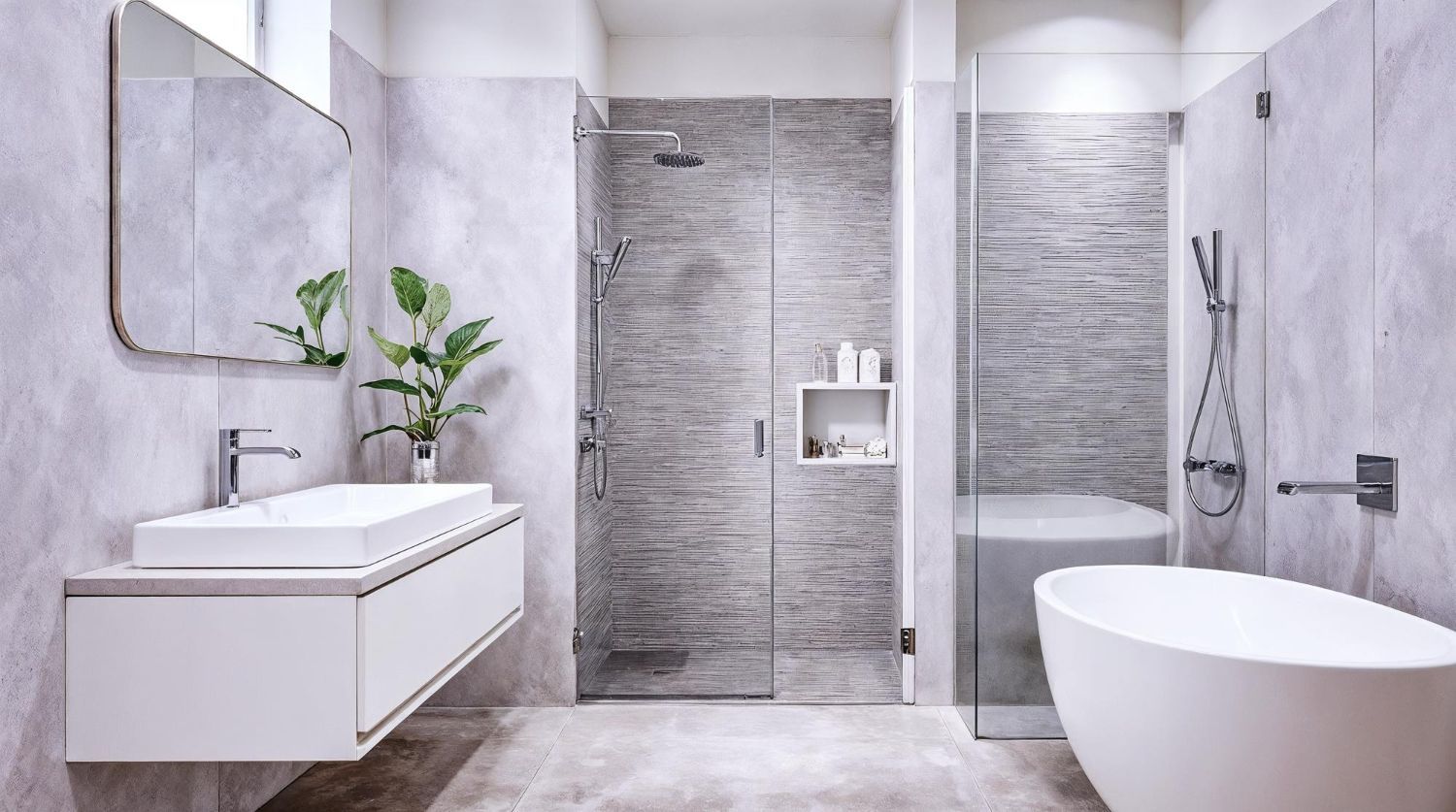
Custom tile allows for total control over the layout and aesthetic of the room. We can incorporate recessed niches for shampoo bottles or build custom corner benches. You can mix and match large format porcelain panels with smaller mosaic accents to create a tailored focal point.
How do these wall systems improve durability?
We utilize dense porcelain tiles and modern epoxy grouts that repel water far better than the materials used two decades ago. By installing a continuous waterproof membrane behind the tile, we ensure that the structural studs never come into contact with moisture.
Are the acrylic panels easy to install?
Acrylic systems are a faster alternative to traditional tile because they are manufactured as large, solid sheets. This eliminates the need for grout lines entirely. The panels are adhered directly to a moisture resistant backer board, making the installation incredibly efficient and the final product very easy to clean.
► Water damage is aggressive and will rot out floor joists if left untreated for too long.
Building a Better Bathroom
Your shower should be a clean and solid structure that you never have to worry about. Investing in proper waterproofing technology ensures your daily routine is not interrupted by crumbling walls or constant scrubbing. Stop fighting a losing battle against porous materials. Reach out to our design team to discuss a permanent fix for your shower enclosure.
Share This Blog